

Chicken Parmigiana
Serves 2 Time 30 minutes Difficulty 2/5 Ingredients 12 Steps 13
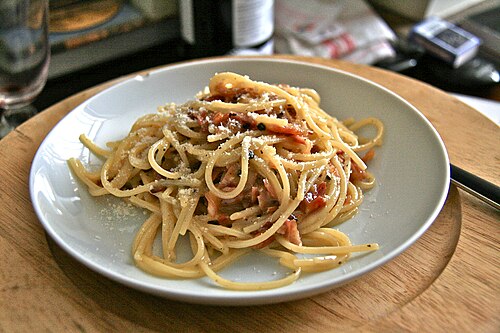
Chicken parmigiana is a popular Italian-American dish served in a variety of ways. The same basic recipe works for a number of dishes. The components usually consists of a breaded, tenderized piece of meat (or slice of eggplant), a simple marinara sauce, and cheese (usually mozzarella). A thicker pasta, such as linguini, a toasted loaf of Italian bread, and a light red wine such as Chianti complement this dish well.
Ingredients
- 2 chicken breasts
- 1 teaspoon of salt
- 1 teaspoon of garlic powder
- ½ a teaspoon of dried oregano
- ¼ teaspoon of dried basil
- ¼ teaspoon of finely-crushed black pepper
- ½ a cup of all-purpose flour
- ½ a cup of tomato puree
- ¼ cup of chicken stock
- ½ a cup of canola oil (see below if you wish to use olive oil)
- ½ a cup of shredded mozzarella cheese
- ¼ a cup of grated parmigiano cheese
Steps
- Heat oil in heavy skillet (preferably cast iron) on medium heat.
- While oil heats, pound chicken breasts to about ½ inch thick with tenderizing mallet (or ball of hand), so chicken is tender and cooks thoroughly.
- Season chicken with salt and garlic powder.
- Dredge breasts in flour. Shake off excess.
- Place both breasts in heated oil 3 minutes. Flip. Fry 2 more minutes.
- Remove breasts. Place on rack or paper towel.
- Preheat broiler.
- Heat tomato puree and chicken stock in large oven-safe saucepan until simmering.
- Add oregano, basil and pepper. Mix.
- Place cooked chicken in pan. Flip several times to coat with sauce.
- Add mozzarella and parmigiana cheese to tops of breasts.
- Broil 30–60 seconds. Check frequently; it burns quickly.
- Remove from oven. Serve.
Notes from the original
- Use thin-sliced chicken cutlets (available at most supermarkets) to avoid the BIG mess and time of pounding.
- If pasta is to be served with this meal, it should be timed so that the parmigiana is done right when the pasta is. The pasta should be removed directly from the pot and placed into the pan. The remaining sauce can then be used with the pasta.
- This recipe works best with breasts that come from slightly older chickens (such as broiler or fryer chickens). These chickens have a stronger taste but are generally tougher. The tenderizing step takes care of the toughness of the older birds though.
- If you do not live in area where fresh tomatoes are grown, canned tomatoes are usually superior to the low-cost ones you will find in the supermarket.
- For veal parmigiana, follow the same steps except do not tenderize. Veal is already tender enough. The veal can also be cooked for 2 minutes on each side.
- Omit the tenderizing step for eggplant parmigiana.
Source. Adapted from “Cookbook:Chicken Parmigiana” by Wikibooks contributors, revision of 2025-12-04, licensed under CC BY-SA 4.0.
Changes. Steps rewritten into short commands. Introduction shortened. Wiki formatting removed. This adapted recipe is shared under CC BY-SA 4.0.