



Gravlax
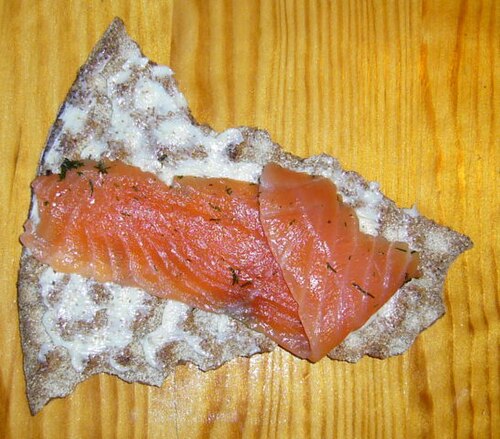
Gravlax is salmon that is cured in salt and sugar. It is a common dish throughout Scandinavia. Gravlax is easy to make and makes a festive dish that is an excellent to serve at parties with many people. The process of curing fish in salt and sugar (grava) is not limited to salmon and works fine with any fatty fish although salmon is definitely the most common choice. Gravlax has been particularly popular and common…
Ingredients
- 800 g (1.75 lb) fresh salmon filet, approximately 2–5 cm (1–2 inches) thick
- 30 ml (2 Tbsp) salt
- 30 ml (2 Tbsp) white granulated sugar
- 45 ml (3 Tbsp) juniper berries
- 300 ml (1 ¼ cups) gin (optional)
- 5 ml (1 tsp) whole or crushed white pepper
- 20–40 g (0.75–1.5 oz) fresh dill
Steps
- Cut the salmon filet into two equal parts (two filets if making for many people).
- Freeze at -18°C or colder, at least 4 days, to kill parasites.
- Thaw, preferably overnight in the refrigerator. Complete thawing is not required.
- Combine the salt and sugar. Place the salmon skin down on a table.
- Rub the salt and sugar mix onto the pieces. Apply the juniper berries and pepper. Cover with dill.
- Place one piece on top of the other, flesh to flesh, skin outside. Place in a plastic bag.
- Add any leftover ingredients and the gin to the bag.
- Seal the bag. Refrigerate 4 days, turning the bag over once, preferably twice, a day.
- After 4 days, serve. If not eating immediately (keeps a couple of days), move to a fresh plastic bag or jar, discarding the salty liquid.
- Slice thin slices at an angle with a sharp knife. Remove any remaining bones while slicing.
- Serve as a main dish with potato stew, boiled potatoes and gravlax sauce, or in a salad. As an appetizer, serve on crispbread or toast.
Notes from the original
- Use the thick part of the salmon filet found towards the head. Don't use the part closest to the tail, since it is not thick enough.
- The gin can be substituted by lemon or lime juice (like a ceviche).
- The time can be greatly shortened by slicing the salmon thinly before curing it. It can be ready with as little as 4 hours of curing time. However, using this method means it should also be eaten sooner.
Source. Adapted from “Cookbook:Gravlax” by Wikibooks contributors, revision of 2025-06-14, licensed under CC BY-SA 4.0.
Changes. Steps rewritten into short commands. Introduction shortened. Wiki formatting removed. This adapted recipe is shared under CC BY-SA 4.0.
Photo. Gravlax on bread.jpg by Aarno at English Wikibooks, CC BY-SA 3.0, via Wikimedia. Resized; otherwise unchanged.