



Mead
Difficulty 4/5 Ingredients 5 Steps 13
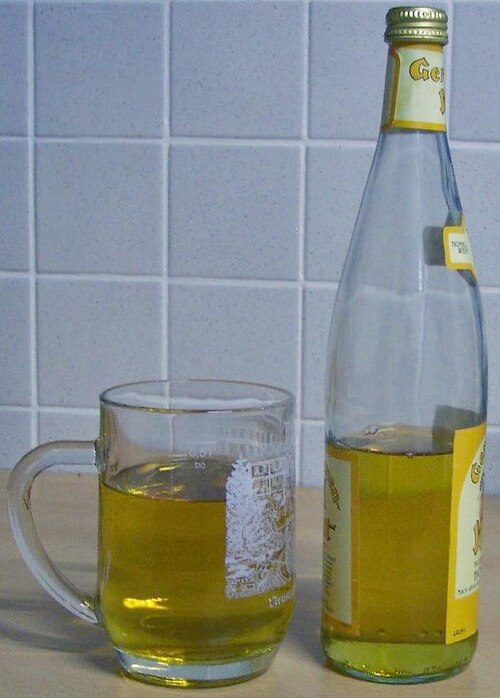
Mead or honey wine is a fermented alcoholic beverage made of honey, water, and yeast. It can have a wide range of flavors, depending on the source of the honey, additives including fruit and spices, the yeast used for fermentation, and the aging procedure.
Ingredients
- 1 cup room temperature sterilized fruit juice (optional)
- 1 packet of dry winemaker's yeast (Lalvin EC1118, K1V1116 or similar) as well as yeast nutrient
- 3 quarts water
- 3 pounds (1 quart) honey
- 1 pound raisins (optional)
Steps
- Sanitize all equipment (see notes).
- Optional starter culture: mix fruit juice and yeast in 1-quart container fitted with rubber stopper and airlock. Keep at room temperature out of direct sunlight 1–2 days until bubbling.
- Heat water in pot over medium heat. Slowly stir in honey until dissolved. Boiling alters flavor but improves clarity.
- Remove from heat. Cool to 170°F (76°C).
- Stir in raisins. Transfer to fermentation vessel. Cool to room temperature (about 68°F/20°C).
- Rehydrate yeast if no starter culture was made. Transfer yeast mixture to honey mixture in vessel. Attach airlock.
- Place vessel in cool (68°F/20°C), dark place. After about a day, airlock bubbles indicate fermentation and raisins rise. Do not stir or agitate; liquid may spill out of airlock.
- Ferment 4–6 weeks.
- Optional: rack mead to clear faster. Siphon into second carboy with sanitized tube, avoiding sediment and splashing. Attach airlock.
- Ferment another 3 months or until fermentation stops (airlock bubbles over 30 seconds apart) and mead is clear enough to read a newspaper through.
- Rack mead once more.
- Bottle in sterilized bottles with airtight caps or quality corks. Bottles can explode if fermentation is incomplete.
- Age in bottle at least 6 months before drinking.
Notes from the original
- Mead should be made in sanitized equipment to ensure food safety. Potassium metabisulphite is a common sanitizing agent. Those who are allergic to sulphites can use other sanitizing methods. Failure to remove all traces of this chemical from the equipment may result in poisonous or otherwise undrinkable mead.
- It is imperative that sterile conditions be maintained while the carboys are open to avoid infection.
- The mead needs to age, usually for one year, and anywhere up to five or more. Bulk aging can be done done in a tertiary carboy.
- Excessive racking will promote oxidation, resulting in an undrinkable mead.
- This module uses text from the Wikipedia module Mead under the terms of the GNU Free Documentation License. Please see that module for the authors of the text prior to its adaptations in Wikibooks.
Source. Adapted from “Cookbook:Mead” by Wikibooks contributors, revision of 2025-06-10, licensed under CC BY-SA 4.0.
Changes. Steps rewritten into short commands. Introduction shortened. Wiki formatting removed. This adapted recipe is shared under CC BY-SA 4.0.
Photo. Met Flasche und Glas.jpg by Stahlkocher, CC BY-SA 3.0, via Wikimedia. Resized; otherwise unchanged.