


Onigiri
Serves 1 or more Time 45 minutes Difficulty 1/5 Ingredients 8 Steps 4
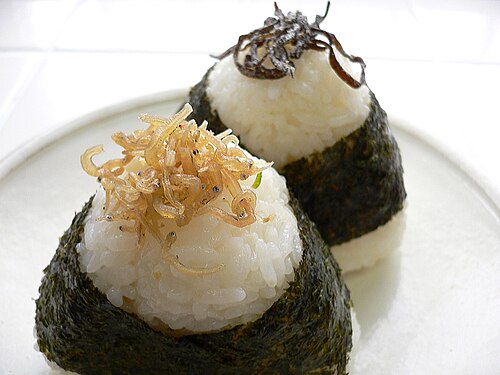
Onigiri (also called omusubi) is a ball or triangle of hot or cold rice, often with a filling, frequently wrapped in nori making it easier to eat. It is a popular snack food, and is also common as part of a packed lunch. Depending on your location, some convenience store chains have shelves with a large selection of fresh onigiri for sale.
Ingredients
- 100 ml (½ cup) uncooked Japanese-style short grain rice
- Filling of choice, such as any of the following:
- Umeboshi (pickled plums), stones removed
- Canned tuna, mixed with mayonnaise and seasoned to taste with chopped leeks, soy sauce, or chilies; sour or salty flavours work well.
- Cooked salmon
- Cooked egg
- Katsuobushi, moistened with a small amount of soy sauce
- Nori sheets
Steps
- Cook rice per package or rice cooker directions. Cool just enough to handle.
- While rice cooks, prepare fillings.
- Fill bowl with salt water to rinse fingers and season onigiri. Method 1: wet hands in salt water. Take two large spoonfuls of rice in one hand (rice is hot). Gently squeeze and flatten with other hand. Make indentation in middle. Put some filling in center only, not all over the ball; stickiness is good. Fold rice over filling to cover. Squeeze gently. Mold into triangle by folding both hands along palms, fingers straight, rotating ball a few times. Put on clean surface to cool. Rinse hands in salt water. Repeat. Method 2: drape cling wrap loosely in bowl. Place about ⅔ of rice portion in center. Add approximately 2 teaspoons filling (about 3–4 portions per cup of rice). Add last ⅓ of rice on top. Mold onigiri within cling wrap.
- Once balls are reasonably cool, wrap in cling wrap or put in airtight plastic container to prevent drying. To eat, wrap one rice ball in piece of nori. Or wrap in nori beforehand if soggy nori is acceptable.
Notes from the original
- You must use Japanese-style short grain rice; if the rice isn't sticky, the onigiri won't hold together.
- A rice cooker is recommended since it will be far more 'hands-off' and will also free up more time to prepare the fillings.
- There is wide latitude on what you can use as a filling. Try experimenting!
- It is a good idea to have a moderately large, clear workspace that is easy to clean afterwards. The rice is sticky, and you will end up getting it everywhere in the area.
- Do not use refrigerated, cold rice. Do not refrigerate the onigiri after assembling. Store in lunch cooler or thermos—otherwise the rice gets hard and doesn’t taste good. You can freeze onigiri, then microwave them to defrost.
- Fillings for onigiri are only limited to your imagination. One point to remember is to choose fillings that are not overly hard/crunchy. If they are reasonably hard they become quite difficult to eat. Western fillings that can be quite delicious include such things as corned meats, avocado, even olives or semidried tomatoes. A recommendation is to use fillings with a lot of flavour and cut into small pieces.
Source. Adapted from “Cookbook:Onigiri” by Wikibooks contributors, revision of 2025-06-14, licensed under CC BY-SA 4.0.
Changes. Steps rewritten into short commands. Introduction shortened. Wiki formatting removed. This adapted recipe is shared under CC BY-SA 4.0.
Photo. Onigiri by yomi955.jpg by yomi955, CC BY 2.0, via Wikimedia. Resized; otherwise unchanged.