

Pavlova
Difficulty 3/5 Ingredients 10 Steps 6
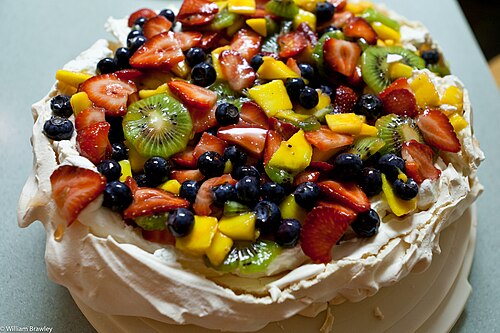
Pavlova is a light and fluffy meringue dessert named after the ballet dancer Anna Pavlova. Both Wellington, New Zealand and Perth, Australia claims to be the home of the dish. The earliest record of the recipe is a cookbook published in New Zealand in 1933, two years before claims made in Perth.
Ingredients
- 3 egg whites
- 3 tablespoons water
- 250 g (9 oz) caster sugar
- 1 pinch salt
- 5 ml (1 tsp) vinegar
- 5 ml (1 tsp) vanilla extract
- 1 tsp cornstarch (optional)
- Heavy cream
- Powdered sugar to taste
- Cut fruit and/or berries
Steps
- Whip egg whites and salt to very stiff consistency. Add water. Beat again.
- Fold in caster sugar, vanilla and vinegar. Whip until sharp peaks hold.
- Spread onto a baking sheet lined with parchment paper.
- Bake at 150°C (300°F) about 45 min until dry outside with a crisp shell and soft, moist interior. Cool.
- Whip cream and powdered sugar to medium peaks. Spread over the meringue.
- Arrange fruit on top. Serve immediately.
Notes from the original
- You can turn the meringue upside down before decorating with cream and fruit because the bottom is less crispy than the top after cooking, and unless you serve it immediately after decorating the "top" absorbs moisture from the cream.
- You can leave the meringue in the oven after turning off the heat—this helps to prevent the middle of the pavlova from collapsing (although if it does collapse, generous application of cream can hide any mistakes!)
Source. Adapted from “Cookbook:Pavlova” by Wikibooks contributors, revision of 2025-10-26, licensed under CC BY-SA 4.0.
Changes. Steps rewritten into short commands. Introduction shortened. Wiki formatting removed. This adapted recipe is shared under CC BY-SA 4.0.
Photo. Pavlova cake - Down under dessert.jpg by William Brawley, CC BY 2.0, via Wikimedia. Resized; otherwise unchanged.