



Pesto I
Time 45 minutes Difficulty 3/5 Ingredients 6 Steps 5
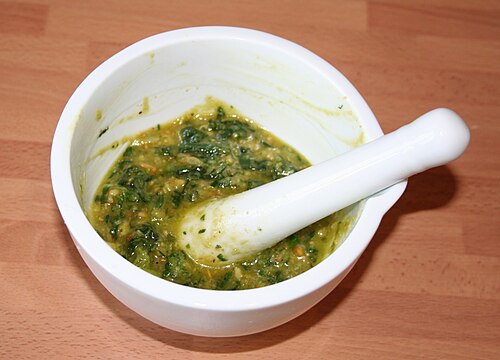
Pesto is a sauce that originates in the city of Genoa in the Liguria region of northern Italy (pesto alla genovese). It can be used as a sauce for pasta or meat, or can be used as an ingredient in a variety of dishes. One classic use is to spread the pesto onto slices of bread before toasting. The word "pesto" derives from the Italian for pestle, pestello.
Ingredients
- 4 oz (100 g) fresh basil
- About 8 oz (200 g) extra virgin olive oil
- ⅓ cup freshly grated Pecorino Romano or Parmigiano-Reggiano cheese or a 1:1 mixture.
- ¼ cup pine nuts or nut of choice (optional)
- 4 cloves garlic
- Freshly ground salt and pepper (to taste)
Steps
- Preheat oven to 425 °F (220 °C).
- If using, toast pine nuts in ovenproof pan 10–15 minutes, checking every 5 minutes to prevent burning.
- Heat 2 tbsp olive oil in small frying pan (skillet) on medium heat.
- Crush garlic. Sauté in oil until soft, about 2–3 minutes.
- Combine basil, garlic, cheese, pine nuts and oil in mortar and pestle until smooth paste. Or chop finely in food processor or blender, adding oil slowly to paste consistency.
Notes from the original
- The sauce can be used immediately, when covered with a thin layer of olive oil and refrigerated in an airtight container for one week, or when frozen for several months. The cheese can be omitted to allow longer storage, as it is the most likely ingredient to spoil. Grated cheese can then be added before use.
- It's possible to store pesto in jars for longer periods, but it's advisable to add a little extra olive oil on top of the filled jar, otherwise the top of your pesto will turn brown as it oxidizes in the air.
- Traditionally, a mortar and pestle is used to make the sauce. The crushing action of the mortar and pestle produces a more intense flavor than the chopping action of a food processor. When using a food processor, you can simulate the additional flavor given by the mortar and pestle method by placing the basil leaves in a plastic bag and crushing them with a rubber mallet or rolling pin prior to use.
- Good quality Parmesan cheese may replace the Pecorino for a milder taste. Crumbled feta cheese also works well for a different taste.
- A common change to the recipe is to replace some or all of the pine nuts with sunflower seeds, walnuts, pistachios, or almonds. This significantly reduces the cost of the sauce. Besides being cheaper, it is also necessary for people with nut allergies.
- For a creamy sauce, take 2 tablespoons of the pesto in a pan and heat on medium-low. Add 1 cup light cream and bring to a simmer. Use for pasta.
Source. Adapted from “Cookbook:Pesto I” by Wikibooks contributors, revision of 2025-06-21, licensed under CC BY-SA 4.0.
Changes. Steps rewritten into short commands. Introduction shortened. Wiki formatting removed. This adapted recipe is shared under CC BY-SA 4.0.
Photo. Fresh Pesto.jpeg by David Johnson [1], CC BY-SA 3.0, via Wikimedia. Resized; otherwise unchanged.