


Risotto (Basic)
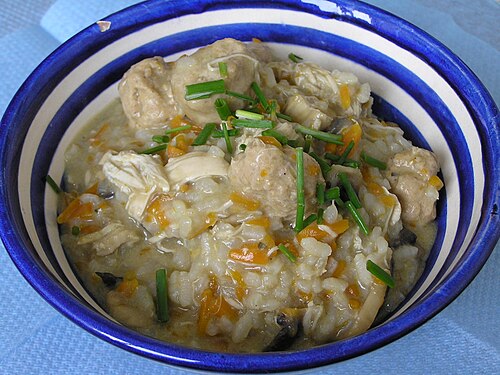
Risotto is an Italian rice dish, most popular in northern Italy. Traditionally, risotto is the name given to all recipes that use rice as the main component and are served as first dish in a traditional Italian lunch or dinner as usually pasta also is. When rice arrived in Italy six centuries ago from the Far East, it found an ideal place for cultivation in the Po river plain and during the Renaissance and gradually…
Ingredients
- 400 g (14 oz) risotto rice
- 1 onion, finely chopped
- 1 glass dry white wine
- 25 g (1 oz) butter (a good rich butter is best)
- About 1 liter stock/broth (but it's a good idea to have more than you need)
Steps
- Sweat onion gently over medium heat in some butter or olive oil, without browning.
- Add rice. Cook until transparent. Add some salt and pepper.
- Add wine. Use hot pan to evaporate alcohol quickly; do not burn rice or onion.
- When wine is mostly gone and liquid has thickened, add some stock. Do not submerge rice in stock. Stir constantly, adding more stock as it cooks away, 15–20 minutes.
- Taste. Rice should be soft with bite left in grains. Risotto should spread out slowly on a plate. If it sits still, add more stock; if liquid seeps out, cook down more.
- Rest 1 minute.
- Vigorously stir in butter in small chunks, tasting for amount. Season with more salt and pepper.
- Serve immediately.
Notes from the original
- This is only the most basic risotto recipe. Add ingredients only at the beginning (through the soffritto, when they need to cook with the rice) or at the very end in the mantecatura (for ingredients that lose their flavour with too much cooking, such as herbs). If you want to use ingredients that require a very specific cooking time, like potatoes or broccoli, it's best to blanch them in advance, and add them to the risotto at the very end. It's very difficult to add them to the risotto halfway so that they will be cooked perfectly when the risotto is done. If you want the flavour of the stock to be present in these ingredients, blanch them in the stock. For some ingredients, like mushrooms, the cooking time isn't extremely important. These can simply be added to the risotto somewhere along the line.
- A common mistake in making risotto is to add too much of the extra ingredients. The star of the dish is the rice, and only very little else is needed.
- Ingredients added at the last moment will be laced with butter. This can have a negative impact on the effect of some delicate ingredients, like garden cress.
- Make sure your stock is simmering before you begin. It's important that the temperature is as high as possible, without letting the stock boil. The surface of the stock should just be moving a little. A large thick pot is best for the risotto.
- With risotto, practice makes perfect because there are many factors that influence the outcome. Experiment with several varieties of rice, choose the one you like best and then fine-tune the various parameters like cooking temperature, selection of the proper pot, the amount and timing of seasonings etc.
- What type of stock depends on the flavour you're trying to achieve, but since the flavour of the stock will become the main flavour of the dish, good stock is a wise investment. Canned is better than cubes or powder, home-made is usually best. Make sure the stock isn't too strong or too salty, as it will be greatly condensed. Make sure the stock is clear too, or the texture of the risotto will become gritty.
Source. Adapted from “Cookbook:Risotto (Basic)” by Wikibooks contributors, revision of 2025-07-21, licensed under CC BY-SA 4.0.
Changes. Steps rewritten into short commands. Introduction shortened. Wiki formatting removed. This adapted recipe is shared under CC BY-SA 4.0.
Photo. Risotto bowl.jpg by frank wouters from antwerpen, belgium, CC BY 2.0, via Wikimedia. Resized; otherwise unchanged.