


Tonkotsu Ramen
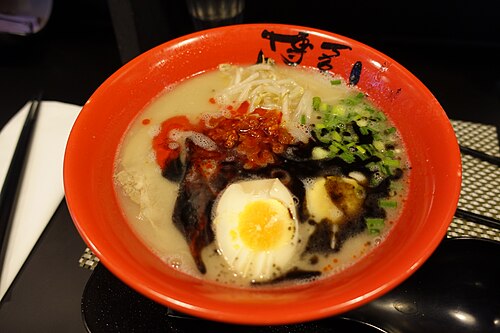
Tonkotsu ramen is a dish of ramen noodles served in rich and fatty pork broth usually garnished with a variation of toppings (most of the time pork cutlets, green onions, and hard-boiled eggs split in two). There are many variations to this recipe. Some people add some chicken bones or beef bones to create a unique combination of flavors. A lot of the ingredients aren't available in just any grocery stores, but you…
Ingredients
Marinated eggs
- 12 eggs in shells
- 1 lb diced pork hock meat
- 3 green onions, cut into 1-inch pieces
- 1 thumb-sized piece of ginger, sliced
- 2 large cloves of garlic, sliced
- ½ cup soy sauce
- 2 tbsp cooking wine/sake/sherry
- 2 tbsp sugar
- ½ cup water
Soup
- 6 pork hock bones
- 3 green onion
- 1 Fuji apple
- 2 medium-sized yellow onions
- 1½ tbsp fresh grated ginger or 2 tsp prepackaged ginger paste
- 3 cloves of garlic, quartered
- 2 tbsp sesame oil
- 12–16 cups water
Noodles
- 500 grams all-purpose flour or medium-strength flour
- 5 grams powdered kansui (see notes)
- 200 ml water
- Potato or corn starch
Chashu
- 500 grams side pork
- 50 ml soy sauce
- 50 ml mirin
- 1 tbsp sugar
- 500 ml water
Steps
Marinated eggs
- Bring pot of water to rolling boil. If desired, prick a pin hole in base of each egg with small thumb tack. Add eggs; water should cover them.
- Return to full boil. Cook 7–9 minutes: 9 for fully hard-boiled, 7 for jammier.
- Drain. Plunge eggs in ice water to stop cooking.
- Sauté pork, garlic, onions and ginger in small pot until slightly browned. Add soy sauce, cooking alcohol, sugar and water. Simmer 10 minutes until pork is cooked through. Remove from stove.
- Remove pork; eat separately. Pour everything else into bowl large enough for marinade and eggs. Peel eggs. Place in marinade, covering all eggs. If not covered, transfer sauce to large ziplock bag, add eggs, seal.
- Place bag in bowl. Refrigerate overnight or at least a few hours.
Soup
- Separate pork hock bones with butcher knife.
- Rinse well in running water to remove blood. Boil in large pot 15 minutes, barely covering bones with water.
- Skim off scum/foam as it forms.
- Drain in colander. Brush off any bloody meat.
- Saw halfway down center of bones. Break bone with hammer.
- Simmer several hours until marrow dissolves out of bones.
- Skim off scum at the start. Maintain low boil over medium heat.
- After scum stops forming, simmer 6 hours or more. Add water if level drops.
- At 2 hours, soup turns white and cloudy, with raw flavor.
- At 6 hours, bones are empty inside and soup smells rich.
Chashu
- Brown meat in pan. Simmer in pot 2 hours in sauce made from remaining ingredients. Cool in pot. Slice with care; it is very tender.
Noodles
- Mix flour and kansui. Add water. Dough will seem dry; this is normal.
- Mix in bowl to mealy consistency. Press with body weight into stiff ball.
- Transfer to kneading surface. Knead vigorously 10 minutes. Cracking is okay.
- Form ball. Cover with plastic wrap. Rest in refrigerator at least 30 minutes without drying out.
- Roll out with rolling pin to 5 mm. Feed through pasta machine from highest thickness down to desired thickness. Without a machine, roll to desired thickness with pin. Noodles expand 1.3 times when boiled.
- Flour lightly with flour or potato (or corn) starch.
- Store in wooden box, or metal tray lined with wax paper in refrigerator.
- Boil noodles in pot of water to each person's preference. Drain. For curly noodles, squeeze firmly.
- Warm large soup bowl. Add drained noodles and broth. Top with char siu and marinated egg. Add salt sparingly, more if desired.
Notes from the original
- Kansui is a Japanese mixture of alkaline salts. Try the Koon Chun brand, which comes in a clear glass bottle labeled “potassium carbonate & sodium bi-carbonate solution”. The UPC is 0-20717-80230-8.
- Any leftover char siu can be eaten with beer. If you ever have trouble slicing soft pork, chill the whole piece in the refrigerator until cold, and it makes slicing easier. Reheating is easy, in either the microwave or oven, even stove top.
- Make sure you keep up on scooping out the foamy gunk from the broth—you don't want all that stuff all over your ramen.
- Don't be afraid to experiment with different types and balances of garnishes!
Source. Adapted from “Cookbook:Tonkotsu Ramen” by Wikibooks contributors, revision of 2025-09-05, licensed under CC BY-SA 4.0.
Changes. Steps rewritten into short commands. Introduction shortened. Wiki formatting removed. This adapted recipe is shared under CC BY-SA 4.0.
Photo. Tonkotsu Ramen Special, Hakata Choten, Paris 001.jpg by Guilhem Vellut from Paris, France, CC BY 2.0, via Wikimedia. Resized; otherwise unchanged.